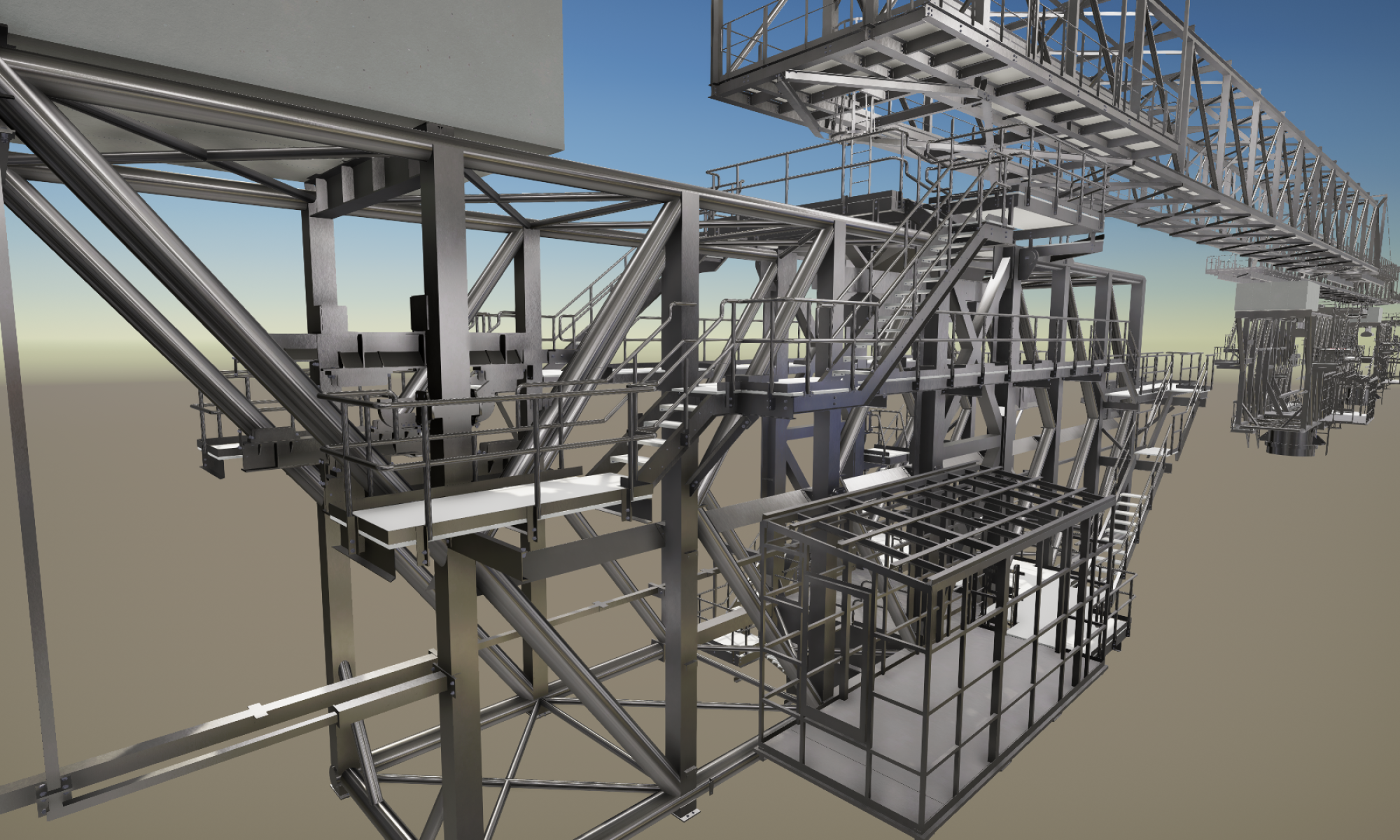


How RFIs due to unfinished design cut the profit in steel fabrication industries
By Peggy Aslan,
President of CADOCAM Inc., Feb, 2021
You bid the project based on available information at bid stage and wrapped your numbers in your estimation based on available and unavailable information on the bid documents. You and your company has some sort of formula/strategy to calculate unforeseen costs and risks associated with them in your price and time schedule to cover your expenses to get a fair profit at the end of your projects, you will award the projects with delay and have to adjust your resources in order to hit the aggressive time schedule to hit the time schedule and get your customer satisfaction.
This is a repetitive story for many of steel fabricators around the world and specially in North America.
The sad part is when you collect your numbers to see if you made as many as you anticipated in your proposal/Quote you will find you burnt all of many in your unforeseen and cut some of your profit without having a solid track about to what happened in your failed project.
There are to many items to list and look at to in a failed project to find out what was the root causes of fail and here is some of them:
- Estimation Error and scope missing
- Fabrication Error and Rework
- Lack of proper planning
- Not tracking change order and Extras
- Fees associated with Back charges and liquidated damage
- Not ordering material at the right time with right amount
- Extra hours charged to the project for management and coordination

Above list are just couple of many root causes that may cause of cutting profits for Fabricators in this industry, but all of them can come from one common cause which is “Unfinished design” in Architecture and Structural drawings that needed stakeholders in all trades specially in steel Fabrication raise dozen to thousands of RFIs to Finish the Design that suppose to be finished at early stage of the project!

But what is the definition of RFI and does fabricator have to absorb all those costs related to the unfinished design?
Typically, when RFIs will be raised based on Unfinished design?
- Where necessary information appears to be missing from the design drawings or specifications, or where the information contained on the design drawings or specifications appears to be incomplete.
- Where there appear to be discrepancies within the design drawings or specifications, such as conflicting information between plans and details or between the drawings and the specifications.
- Where the fabricator requests permission to use alternate materials due to lack/non of availability for material, Size, grade, shape and geometry of profile that asked in Architectural drawings.
- Where the Fabricator/Erector seeks an approved method to resolve field conflicts between trades or constructability issues due to conflict in Architectural and structural drawings.
Above items is just some of occasions that Fabricator must raise RFIs in order to clear the path for the project and normally it is seen in the estimation under “Project management cost” or Detailing cost” or some times in “overhead/unforeseen cost”.
Based on different studies in construction projects the number of legitimate RFIs should be 15 to 20 RFIs per $500K cost of contract And Any number beyond this can be called as unfinished design! Other studies show each RFI would be cost around $1080 for construction projects (Project management cost) and this is around $600 for Steel Fabricators (cost of detailing and project management per RFI)
That said if at the end of a $900k steel fab. project you are at RFI No.38, you are starting to burn money in Project management budget side on your project due to unfinished design.

This crucial to know that above cost is only cost of RFI in project management and there are also other cost that associated with unfinished design as well that can be different for each steel fabrication plant such as:
1. Cost of having agile and hybrid planning for fabrication shop due to discovering new defect of information on drawings from time to time.
2. Cost of re-scheduling/re-planning manpower and facilities due to late responses on RFIs, or revising drawings based on RFI responses.
3. Cost associated with material shortages and double handling, shipping (hold items based on RFIs)
4. Costs stated as penalty for liquidate damage and not meeting the schedule.
5. Cost associated with Fabricator engineer for Re-visiting connection design based on latest changes on unfinished design.
6. Cost of Errors in fabrication due to unclear and ambiguous details in Architecture and Design drawings.
With all said and all those costs shall we padding the estimate or putting a side more money for this unfinished design?
The clear answer is NO, but how we can survive and manage the cost related to unfinished design?
There are some practice and tools that help fabricators in order to keep this affects at the minimum cost:
- Write and collect any defect on drawings (if captured) at the time of estimation and store the in-estimation knowledge sheet to hand over to operation team when project awarded.
- Kick-off meeting between estimation, project management and production team at the time of award the project to collect defects (unfinished design) at very high level.
- Communicate with the customer on weekly basis about status of each RFI in your project management report.
- Studying and raising early RFIs on the project with Use BIM techniques and virtual meeting with detailing team.
- Using Live RFIs for easy understanding between trades (Cadocam Live RFI. For more information visit http://www.cadocam.com).
- Assign a priority to each RFI and limit it to one Question Per RFI No.
- Include specific references to drawings and details.
- Include suggested solution to get approval.
- Disclose if any time schedule and cost effect will occur because of any pending RFI.
- Indicate if RFI is time sensitive.
- Assume that RFI responses are approval, unless specifically noted otherwise.
At CADOCAM, we can help you to finish your projects successfully. We have a professional team to assist you in all stages of your projects from estimating to the end. You can check out our website or send us your questions by email at info@cadocam.com.